
Before the towns and the mines
Human presence in the region dates back more than eleven thousand years. Rock shelters, paintings and paths help us understand the ancient relationship between people, water, plants and natural cycles. Each site has its own history and should be visited with respect for conservation rules.
The Acroá, Xacriabá, Capepuxi, Caiapó, Xavante, Karajá and Avá-Canoeiro are part of the history of settlement in central Brazil. They are distinct peoples, with their own languages, territories and ways of life. Farming, hunting, fishing and movement took varied forms, grounded in knowledge of soils, animals and seasons.
Colonization, enslavement, expulsions, epidemics and territorial restrictions marked these histories. Indigenous history continues in the present, in communities, in organizations and in the struggle for rights.
Gold, settlements and territory
Anhanguera’s passage in 1722 and the search for gold transformed the region. Villages and farms grew on territories that were already occupied, using the labor of enslaved people. Cavalcante, Alto Paraíso and Nova Roma hold different parts of this memory.
The Avá-Canoeiro have historical records dating back to 1725 and a relationship with the forests and rivers of the Araguaia, Tocantins, Maranhão and Paranã systems. Even in the face of persecution and loss of territory, they preserved their identity and claimed their rights. The ratification of the Avá-Canoeiro Indigenous Land, in Goiás, was announced on April 28, 2023.
Indigenous territories are not open to free visits. Learning this history starts with respecting the communities’ decisions. At the Aldeia Multiétnica, scheduled gatherings and experiences offer opportunities to learn from those who wish to share their knowledge.
Kalunga: ancestry and community life
The Kalunga communities are spread across Cavalcante, Teresina de Goiás and Monte Alegre de Goiás. Their paths, farm plots, rivers, festivals and traditional knowledge express a history of resistance and autonomy.
Community-based tourism lets you discover waterfalls as well as the meals, arts, products and stories of the people who live in the territory. Arrange your visit through community channels and respect homes and places of celebration.
A calendar of gatherings
Folias, pilgrimages and dances bring together Indigenous, African, rural backlands and Catholic influences. They are moments of devotion and fellowship passed down among families and local groups.
| Traditional season | Celebration | Where to experience it |
|---|---|---|
| December and January | Folia de Reis | Communities in the region |
| First half of July | Caçada da Rainha | Colinas do Sul |
| August | Romaria do Muquém | Muquém, in Niquelândia |
Confirm each year’s schedule before booking travel. When taking part, follow the pace of the celebration and ask permission to photograph people and ceremonies.
Romaria do Muquém
Muquém is a district of Niquelândia, approximately 47 km from the municipal seat and 92 km from Colinas do Sul. The pilgrimage of Our Lady of Abadia, a tradition more than 270 years old, is linked to the Chapada by ties of faith, travel and kinship.
Pilgrims arrive on foot and by other means, fulfill vows and follow the celebrations. Trade, food and performances bring life to the area around the shrine. During the festival, plan for traffic and overnight stays well in advance.
Folia de Reis
With Portuguese roots and developed in colonial Brazil, the Folia de Reis celebrates the Magi’s visit to the infant Jesus. The tradition absorbed Brazilian experiences, including African influences in the music and the celebration.
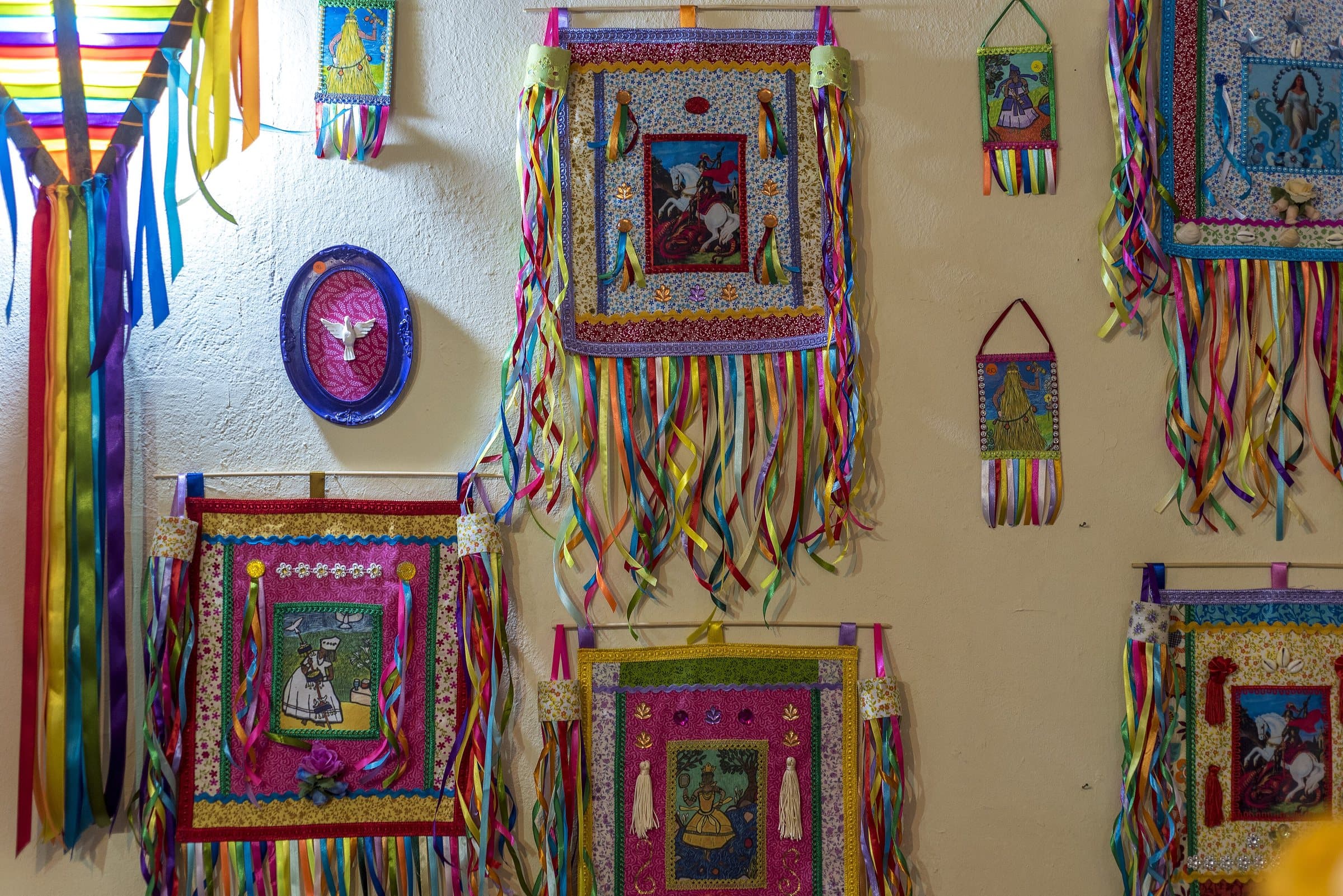
Groups make their way through homes and communities with songs, instruments and the Folia banner. A master and an assistant master lead the singing; musicians and participants accompany the visit. The traditional cycle runs from December 24 to January 6, with variations between communities.
The clowns have different interpretations: they may symbolically protect the infant Jesus or represent characters linked to Herod’s persecution. The banner is revered. High-pitched voices, call-and-response verses and instruments give shape to the celebration.
Welcoming the group, offering food and accompanying its passage reaffirm the bonds between families. For visitors, it is a chance to experience this network of hospitality while respecting its rituals.
Caçada da Rainha
In Colinas do Sul, the Caçada da Rainha combines reenactment, processions, music and devotion to Our Lady of the Rosary and the Divine Holy Spirit. Kings, queens and residents take part in the search for and meeting with the queen, traditionally in the first half of July.
The popular story goes that Princess Isabel supposedly went into hiding, fearing the reaction of her father, Dom Pedro II, after freeing the enslaved. It is an oral tradition that shapes the festival and its memory of abolition. Each year’s schedule sets the times and the moments open to visitors.
Sussa: Kalunga dance and memory
In the Sussa, music, movement and celebration express Afro-Brazilian backlands culture and Kalunga life. Women in chita (printed cotton) skirts spin and mark the rhythm with their feet. In some performances, they balance bottles on their heads, with a bodily mastery learned through community life.
The pandeiro tambourine, the viola (a Brazilian guitar), the snare drum and the tambor-onça accompany the voices. The tambor-onça is a low-pitched friction instrument that works much like a cuíca. The makeup of the groups and the forms of participation vary between communities.
The dance is part of religious festivities and moments of recreation, connecting people, ancestry and territory. To experience it, arrange an experience offered by the community and pay for the cultural work.